Key Takeaways
- Washington DC offers several first-time home buyer assistance programs, including the DC Open Doors program with down payment help of up to $100,000 for qualifying buyers
- Neighborhoods like Capitol Hill, Petworth, and Columbia Heights offer the best combination of affordability and walkability for first-time buyers in 2026
- Getting pre-approved before you start touring homes gives you a serious advantage in a competitive market where the median sale price across the DC Metro sits at $649,000
- Closing costs in Washington DC typically range from 2% to 5% of the purchase price, and understanding the full costs upfront prevents surprises at the settlement table
- A strong buyer's agent provides neighborhood-specific comparable sales data, connects you with trusted lenders, and guides you through every step from offer to closing
What you need to know as a first-time home buyer in Washington DC in 2026: the process involves understanding your budget and getting pre-approved, exploring DC's home buyer assistance programs, choosing the right neighborhood, and working with a buyer's agent who knows the District's unique market dynamics. The DC Metro market is running at a median price of $649,000, but with the right strategy and local knowledge, buying your first home in the nation's capital is achievable.
First-time home buyers face a market that is different from what any previous generation walked into. Interest rates are above 6%, inventory is still tight, and DC's competitive neighborhoods demand preparation and speed. But the fundamentals that matter most have not changed: knowing what you can afford, understanding where you want to live, and having a trusted guide through the process. Here is what every first-time buyer in Washington DC needs to know in 2026.
Step 1: Know Your Budget and Get Pre-Approved
Before you browse listings, you need a clear picture of what you can afford. That means more than a quick online mortgage calculator. A pre-approval from a reputable local lender gives you a concrete number and shows sellers you are a serious buyer. In a market where the DC Metro median home price reached $649,000 year-to-date through July 2026 (source: Bright MLS), knowing your price ceiling before you start touring saves everyone time.
Your pre-approval should account for the full cost of homeownership, not just the mortgage payment. Property taxes in DC range from about 0.85% of the assessed value annually. Homeowners insurance, private mortgage insurance (PMI) if your down payment is under 20%, utilities, and ongoing maintenance all factor into the real monthly cost. A good lender walks you through these numbers so there are no surprises six months into ownership.
Lenders look at your debt-to-income ratio, credit score, employment history, and available assets. Most conventional loan programs want a DTI under 43% and a credit score of 620 or higher, though FHA loans may allow more flexibility. The stronger your financial profile, the better your interest rate and loan terms will be. Taking three to six months to improve your credit score or reduce debt before applying can save you thousands over the life of the loan.
DC's First-Time Home Buyer Assistance Programs
Washington DC is one of the most generous cities in the country when it comes to first-time home buyer assistance. The District of Columbia's Department of Housing and Community Development (DHCD) runs multiple programs designed to help qualified buyers afford a home in the city.
The most significant is the DC Open Doors program, which offers deferred-payment down payment assistance loans of up to $100,000. The loan is interest-free and forgiven after 10 years if you remain in the home as your primary residence. Buyers must meet income limits (typically 80% of the Area Median Income, adjusted for household size) and complete a home buyer education course approved by DHCD.
The Home Purchase Assistance Program (HPAP) provides matching funds for down payment and closing costs, up to $100,000 for households earning up to 80% of the AMI. HPAP funds come as a 10-year forgivable loan. For teachers, police officers, firefighters, and certain other public service professionals working in DC, additional employer-assisted programs can add another layer of support.
There are also DC-specific mortgage credit certificates available through the DC Housing Finance Agency that can reduce your federal tax liability, effectively lowering your monthly housing cost. These programs are not automatic. You need to work with a lender who knows how to layer them correctly and a real estate agent who understands which neighborhoods and price points qualify. The complete buying guide walks through how these programs fit into a broader purchase strategy.
Choosing the Right DC Neighborhood for Your First Home
Washington DC is not one market; it is dozens of micro-markets, each with its own price range, lifestyle, and inventory patterns. For first-time buyers in 2026, the best neighborhoods strike a balance between affordability and quality of life.
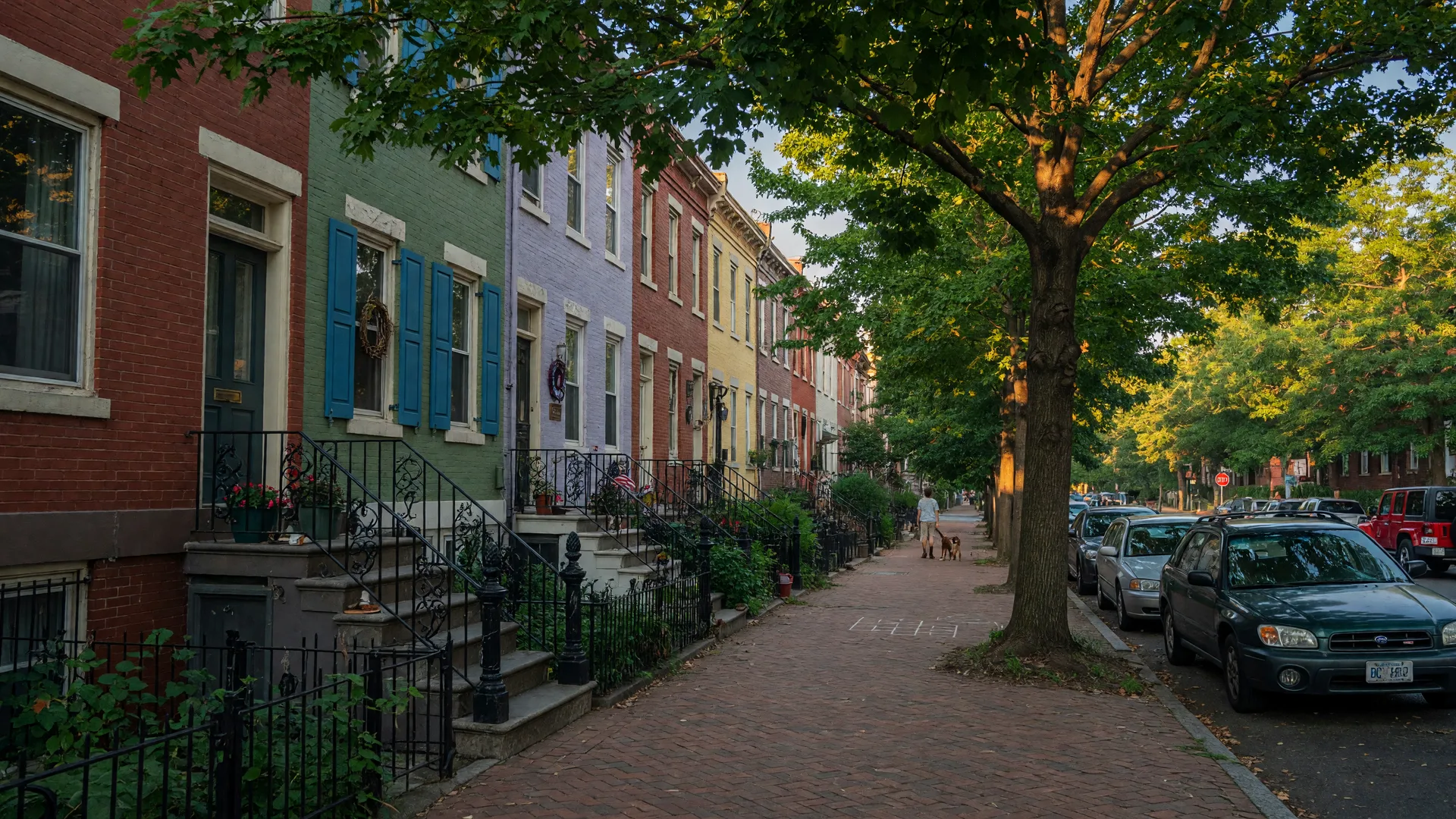
Capitol Hill remains one of the most sought-after neighborhoods in DC for good reason. The tree-lined streets with historic rowhouses, the proximity to the Capitol and metro stations on the Blue, Orange, and Silver lines, and the strong sense of community make it a perennial favorite. Rowhomes in Capitol Hill typically range from the mid-$700,000s to over $1.2 million depending on size and condition, making it a stretch for some first-time buyers but well within reach with assistance programs.
Petworth and Columbia Heights offer more accessible price points for first-time buyers. Petworth, centered on the Georgia Avenue corridor and the Petworth Metro station on the Green Line, has seen steady appreciation but still offers condos and smaller rowhomes starting in the high $400,000s to low $600,000s. Columbia Heights, with its dense commercial corridor, farmers market, and easy access to the Green and Yellow lines, offers similar price points with a more urban, high-energy feel.
Georgetown is in a different price tier altogether. The historic waterfront neighborhood commands premiums across every property type, with condos routinely starting above $500,000 and rowhomes selling well north of $1.5 million. For first-time buyers who can stretch into Georgetown, the walkability, dining, and waterfront access are unmatched. The Georgetown neighborhood guide provides detailed pricing, transit, and lifestyle information.
Dupont Circle attracts buyers who want the most walkable neighborhood in the city. Condos and co-ops dominate the inventory, with studio and one-bedroom units starting in the $300,000s. The neighborhood's central location, access to four Metro lines, and 24-hour urban energy make it a strong choice for first-time buyers prioritizing lifestyle and commute over square footage.
Navy Yard and the H Street Corridor are worth watching for first-time buyers who want newer construction and a developing neighborhood dynamic. Navy Yard, anchored by Nationals Park and the Yards Park waterfront, has added thousands of condo units over the past decade. Prices have moderated as new inventory has come online, creating opportunities in the mid-$400,000s to low $600,000s for one and two-bedroom units. H Street Corridor offers a mix of renovated rowhomes and new condos with one of the city's best dining scenes.
Making a Competitive Offer in 2026
In the current market, well-priced homes in desirable DC neighborhoods still attract multiple offers. Being prepared to move quickly and make a strong, clean offer is essential. That means having your pre-approval letter ready, understanding what comparable homes have sold for in the specific building or block you are targeting, and knowing which contingencies you can comfortably waive.
An escalation clause, which automatically increases your offer up to a predetermined maximum if competing bids come in, is common in DC's competitive segments. Earnest money deposits (typically 3% to 5% of the purchase price) show sellers you are committed. And a pre-negotiated appraisal gap strategy protects you if the property does not appraise at the contract price. The appraisal gap guide covers exactly what happens when an appraisal comes in below the offer and how first-time buyers can plan for it.
Your offer strategy should also account for closing timeline. Sellers often prefer a 30 to 45 day closing over a longer timeline. Having your financing lined up and your lender ready to move on the appraisal and underwriting gives your offer a real advantage, especially against other first-time buyers or investors.
What Closing Costs Look Like for DC Buyers
Closing costs in Washington DC typically run 2% to 5% of the purchase price. On a $500,000 home, that is between $10,000 and $25,000 in additional cash due at settlement. These costs include the lender's origination fee, appraisal, title search and insurance, recording fees, transfer taxes, and prepaid property taxes and homeowners insurance.
DC levies a transfer tax called the Deed Recordation and Transfer Tax, which is typically split between buyer and seller unless negotiated otherwise. First-time home buyers in DC can apply for an exemption from the buyer's portion of the transfer tax, saving thousands at closing. Your real estate agent and settlement attorney should alert you to this exemption early in the process, because the timing of the application matters.
Many first-time buyers focus all their attention on the down payment and overlook closing costs. Planning for both from the start prevents the last-minute scramble for additional funds. The down payment assistance programs through DHCD can help cover closing costs in addition to the down payment, which is one of the reasons working with a lender experienced in DC programs is critical.
Why You Need a Buyer's Agent Who Knows DC
As a first-time buyer in Washington DC, the single most important professional you will work with is your real estate agent. A good buyer's agent does more than open doors. They provide neighborhood-specific comparable sales data, connect you with lenders who understand DC assistance programs, negotiate on your behalf, and guide you through inspection, appraisal, and closing. And they do it at no direct cost to you: buyer's agent commissions are typically paid by the seller as part of the transaction.
Look for an agent who works full-time in the neighborhoods you are considering and has recent transaction experience with first-time buyers in your price range. An agent who closed a $2 million Georgetown rowhome last month may not be the best fit for a $500,000 condo search in Petworth. The neighborhood expertise matters more than brand recognition.
Claude's approach with first-time buyers starts with a strategy session that covers budget, timeline, neighborhood fit, and the specific programs and financing options available to you. From there, the search is disciplined, data-driven, and focused on finding not just a property, but the right fit for your life and goals. Whether it is a condo in Dupont Circle, a rowhome in Petworth, or a co-op in Chevy Chase, the process is the same: clarity first, execution second.
Frequently Asked Questions
How much money do I need to buy a first home in Washington DC?
What first-time home buyer programs are available in DC?
What are the best neighborhoods for first-time home buyers in DC?
Do I need a real estate agent to buy my first home in DC?
How long does it take to buy a home in Washington DC?

Claude Labbe
REALTOR · Douglas Elliman · DC, MD, VA
703-868-7774 | Claude.Labbe@elliman.com
Ready to start your first home search in Washington DC? Call Claude Labbe at 703-868-7774 or visit the contact page to schedule a consultation.